

Taking control of your reproductive health can at times be very challenging, particularly with different medical guidelines and confusing terminologies. If you are looking for a reliable pap smear exam near me in Silver Spring, Maryland, getting to know what should be anticipated and why this screening is essential is the first step that changes fear into confidence.
Washington Medical Clinic is committed to transparent communication, your comfort, and excellent preventative care designed for the local community. The following information provides a brief explanation of what a pap test is, how it can help in protecting you, and what you will experience during your examination.
Pelvic Exam vs. Pap Smear:
Both terms get mixed up a lot, and sometimes they get used as if they’re the same thing. But a pelvic exam and a Pap test are different components of your health screening:
- Pelvic Exam: This is a detailed physical examination of your female reproductive system. The doctor will visually inspect and palpate the vulva, vagina, cervix, uterus, and ovaries to identify any cysts, infections, or other abnormal signs.
- Pap Smear: This is a test for cervical cancer screening most often carried out as a pelvic exam. The test involves taking a tiny sample of cells from the cervix to see if there are cancer cells or if there is the virus which can lead to cancer (human papillomavirus or HPV).
It is possible to get a pelvic exam without having a Pap smear. But normally, the two are carried out at the same time.
Pap Exam Frequency: How Often Do You Need One?
The frequency of your routine pap exam mainly depends on your age and medical history. Major medical organizations publish guidelines for standard intervals of monitoring for average-risk individuals:
- For those aged 21, 29: Cytology (a conventional Pap test that checks for cell abnormalities) should generally be done every 3 years.
- For those aged 30, 65: The choice is yours. You could carry on with cytology alone every 3 years, move to a primary HPV test done every 5 years, or decide on co-testing (both a Pap and HPV test) every 5 years.
- For those over Age 65: Generally, most people can cease screening altogether if they have an uninterrupted history of negative results for the past 10 years.
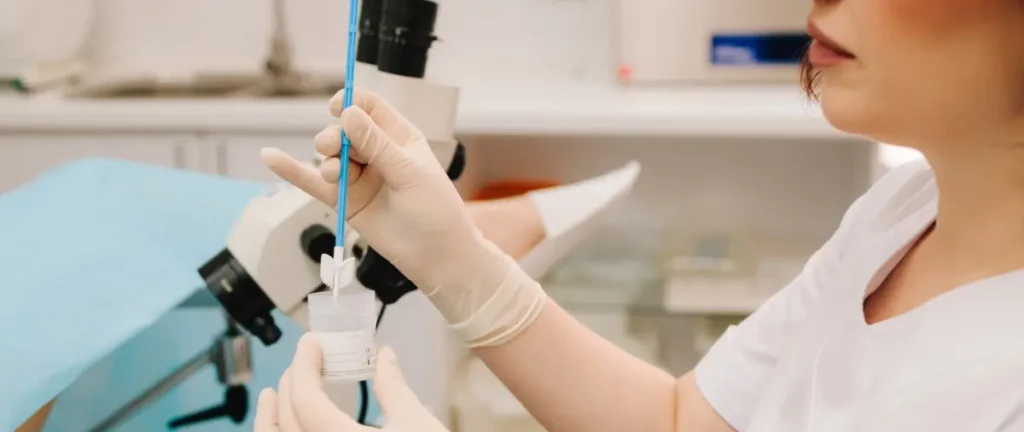
What to Expect During a Pap Smear Procedure
Understanding the pap smear procedure can really help ease the stress of going. Here is what usually happens, at most it is five minutes:
- Preparation: You will be asked to lay down with your feet in the appropriate places.
- Accessing the Cervix: To be able to see the cervix, your doctor will first have to insert a lubricated speculum, which is a medical tool used for holding the vaginal walls apart.
- Cell Collection: The doctor will then take a cell sample with the help of a brush or a spatula which is quite small, soft and gentle. At this point you might get a little pressure or a small pinch sensation.
- Processing: After that the cells will be put in a liquid suspension and taken to a lab where they will be looked at for any type of abnormal cells.
Understanding Pap Smear Symptoms and Results
One of the main confusing issues is the symptoms of the pap smear. It is very important to keep in mind that Pap smear is a screening test that is done regularly for the prevention of any changes before symptoms start. The changes that lead to cancer in the cervix do not produce noticeable signs most of the time.
On the other hand, if you notice any of the following severe changes you should not wait until your next routine check-up but schedule an evaluation right away:
- Abnormal or heavy vaginal discharge.
- Bleeding outside of the normal menstrual periods.
- Discomfort or bleeding from the pelvic area during or after sexual intercourse.
Frequently Asked Questions
First, you get on the examining table and put your feet in the stirrups. After that, a medical practitioner will put a speculum inside your vaginal opening to keep it open; then a very fine brush will be used to gently scrape off a few cells from your cervix and the sample sent for testing.
Generally, it is not painful but only a little bit uncomfortable. Some people say they experience a very brief pinch or piece of pressure that fades away totally in only a few seconds.
You will first notice the sensation of the metal speculum getting inserted into your vagina, which may be a little cold; then, there could be a short period of the feeling of pressure inside or a minor cramping as if it were a period as the cells are being removed.
Definitely! It recognizes changes in cells that may lead to cancer even when you do not have any symptoms so that you are given the necessary treatment and cervical cancer is prevented.