

What if it turns out your chronic cough and chest tightness are more than just fleeting seasonal annoyances and actually indicate that your airways are in need of a new and improved treatment plan?
Millions of individuals suffer from breathing problems on a daily basis, yet they fail to discover the right combination between quick relief of symptoms and maintaining control in the long run. Up until recently, the main way to deal with this health problem was to always have at hand a rescue inhaler and react only after symptoms appear. But, respiratory medicine has experienced a huge change in the last few years. New treatment approaches not only recommend using rescue inhalers, but they are primarily focused on controlling inflammation at the root level so that symptoms do not arise.
If you are in the area and looking for thorough assessment, personalized treatment changes, and leading-edge management options, Washington Medical Clinic in Silver Spring, Maryland remains a source of solid, research-proven care.
What Is the Modern Approach to Treat Asthma?
In the past, medical systems were limited to only giving treatment to patients when their symptoms were very severe and they were just “rescuing” the patients, so to speak. Now, these systems have become more flexible and can judge a patient’s condition from their symptoms and use that information to adjust therapies daily so that a patient’s flare-up may be prevented instead of always trying to get patients to the level where they have symptoms, i.e., constantly playing catch-up.
Inhaling only short-acting beta-agonists (like typical albuterol rescue inhalers) without the use of a daily controller will only make the inflammation in the airways worse that long term. Although a rescue inhaler is capable of giving fast, temporary relief by causing the muscles in the airways to relax, it does not help with the treatment of the swelling that is the cause of the problem. With time, abusing most of the time these quick relief inhalers can result in the airways becoming more sensitive to the stimuli and even leading the risk of serious attacks to the high.
Proper knowledge of the major categories of asthma drugs and the way they synergize is the focus of a safe therapy for asthma today, that is based on the latest guidelines:
- Controllers (Daily Preventatives): These are daily medications, primarily inhaled corticosteroids (ICS), that target inflammation at its source. They operate unobtrusively to diminish swelling and secretion of mucus, thus maintaining long-term functionality of the airways.
- Relievers (Quick Rescue): These are short-acting bronchodilators that quickly open up the airways when there is a sudden asthma attack or unexpected shortness of breath.
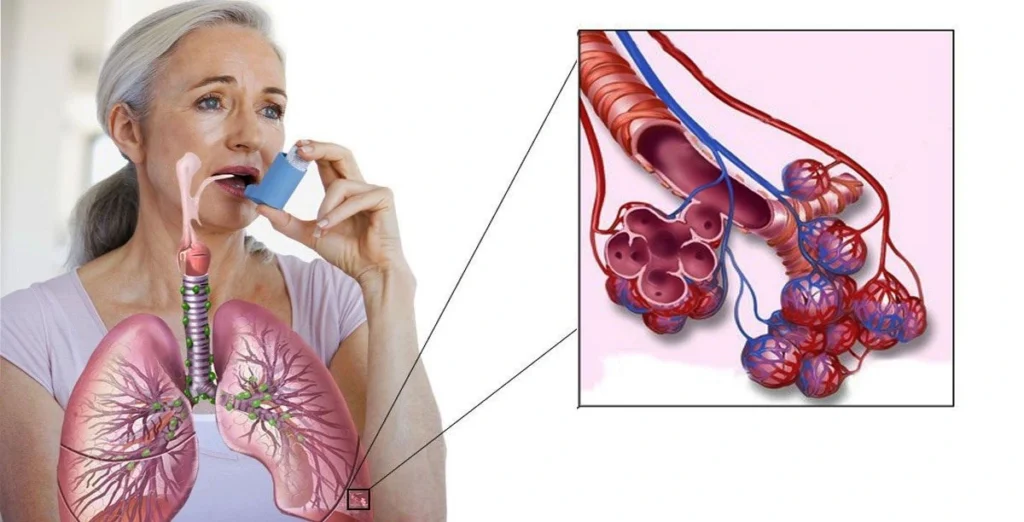
One of the great innovations in merging these two ways is SMART Therapy (Single Inhaler Maintenance and Reliever Therapy). This new method is based on using one combination inhaler with both a controller and a fast-acting reliever that can be used for asthma management and also a quick relief. Rather than having separate drugs and different times to take them, patients rely on the same inhaler for the regularly scheduled doses and also when they have sudden symptoms of asthma, thus a protective dose of anti-inflammatory medicine is always given whenever the airway becomes irritated.
Demystifying the “Treatment Guidelines for Asthma”
The basis of contemporary respiratory therapy is constructed with the help of international frameworks that specify the precise steps for clinical care.
Instead of depending on guesswork, health care professionals turn to the treatment guidelines for asthma as a means of charting a definite, evidence-based plan. This approach guarantees that the kinds and potencies of drugs are accurately adjusted to a patient’s current requirements.
The Stepwise Management Framework
The treatment is designed as a five-step ladder. Doctors assess how often and how severely the symptoms of a patient occur to determine the appropriate step for them, thus avoiding the risks of being undertreated or overmedicated:
- Steps 1 & 2 (Mild / Intermittent Asthma): For patients who have symptoms rarely, a low dose, anti-inflammatory reliever inhaler combination is recommended by the guidelines to be used as required. This way, the medicine is delivered where it is needed most: to the lungs, providing a protective dose that can stop mild symptoms before they develop into a severe attack.
- Steps 3 & 4 Medium / Persistent Asthma: At this point there is greater frequency or intensity of symptoms that relate to the sleep disturbance that in turns leads to upgrade of maintenance inhalation to scheduled doses and without fail every day. The first element of the combination is as and when relieved advanced, dual-action medicines (very often through SMART therapy). The continual regimen leads to minimal baseline airway inflammation and also extending simplicity to the rescue protocols.
- Step 5 Severe / Complex Asthma: A very few percentage of patients will require that even after optimal use of inhalers, their symptoms will be very difficult to control. Such cases will have the unexpected advanced interventions introduced to them. For example, these will include the addition of long-acting muscarinic antagonists (LAMAs) that will help to open the airways by the biological pathway or the use of advanced biologic treatments. Biologics are injections that are targeted and specifically block the proteins that cause very severe, deep-tissue lung inflammation.
The Power of Continuous Assessment
A good treatment plan should be able to evolve. The way airways respond to allergens varies with seasonal changes, different sources of allergens, stress, health condition, etc. Your plan to deal with the condition has to be checked regularly and adjusted (either increased or reduced according to the needs) by the doctor. For example, if your breathing has been fine and under control for three months, your doctor might decide to decrease your medication to the smallest dose that still works. On the other hand, if you are suddenly exposed to things that you don’t get along with, you can be temporarily given a higher dose of your treatment to help you stay safe and breathing comfortably.

Crafting an Asthma Attack Action Plan
Effective treatments involve more than just knowing which drugs to consume, they also involve understanding precisely when and how to take drugs during a therapy cycle. Written, personalized asthma attack plans, which are prepared with the help of a physician, are considered the best way for patients to understand exactly what to do during a flare-up. This piece of paper acts as a guide which makes use of a very simple traffic-light system to aid patients in managing changing symptoms at home, keeping a record of their lung function, and knowing when it is the right time to call an emergency.
This plan divides your daily respiratory health into three different zones:
1. The Green Zone (All Clear)
This is your normal goal. If you are in this zone, it means that your symptoms are very minimal or controlled, for example, no disturbance during the night because of asthma, no coughing, no chest tightness, etc. You have to follow your daily maintenance medication routine without any changes in order to keep your airway inflammation low and to stop the occurrence of symptoms.
2. The Yellow Zone (Caution)
This is the level at which your lungs start feeling irritated. It is likely that you will experience more coughing, wheezing, a slight feeling of tightness in your chest, or a reduction in your peak flow meter readings. The Yellow Zone also contains very clear directions on how to increase your asthma medication temporarily and resort to quick-relief rescue drugs for calming the inflammation before it leads to an even bigger episode.
3. The Red Zone (Medical Emergency)
At this point, the situation is extremely critical and could be fatal. Symptoms might be experiencing great difficulty in breathing, using a rescue inhaler that hardly or does not at all help, or being unable to speak in whole sentences because you are trying to breathe between words. Your action plan will provide you with instructions for immediate medical treatment, such as the intake of the highest possible doses of emergency drugs and going directly to the nearest emergency room.
Take Control of Your Respiratory Health
Dealing with ongoing breathing problems or a chronic cough should not interfere with your quality of life or stop you from doing the things you love. Instead of focusing on quick fixes that only address the symptoms temporarily, you can follow effective, evidence-based guidelines to avoid serious episodes and maintain good lung health over time.
If you want to stop living with the fear of chest tightness and coughing attacks, the solution is closer than you think. People in the Silver Spring, Maryland vicinity are urged to arrange for a thorough checkup, inhale their medicine correctly reviewing, and devising a tailored treatment plan with a help of a specialist. Doing this little work now for managing your illness on a daily basis will make you breathe better and be more comfortable in your life tomorrow.
FAQs
Step therapy is the clinical approach in which medication is titrated up or down over five steps, depending on how effectively symptoms have been controlled. According to asthma standard treatment guidelines, there is a step-up phase of medication during exacerbation seasons and a step-down phase to the lowest dose maintaining effectiveness when the lungs are stable.
To use a metered-dose inhaler, first shake the inhaler thoroughly. Make sure you exhale completely, then tightly wrap your lips around the mouthpiece of the inhaler. Begin pressing the canister down while inhaling slowly and deeply for 3 to 5 seconds. Finally, after inhaling the medication, hold your breath for about 10 seconds to give the medication the best chance to travel all the way down to your airways. It’s advisable to use a spacer with the inhaler to ensure the maximum amount of medication is delivered to the lungs.
There are four levels of severity based on the frequency of symptoms prior to treatment:
a. Intermittent: Symptoms occurring two days a week or less.
b. Mild Persistent: Symptoms happening more than two days a week but not daily.
c. Moderate Persistent: Daily symptoms with sleep loss.
d. Severe Persistent: Symptoms all day long and frequent waking up at night.
Genetics play a big part in airway hypersensitivity. For instance, if a parent has asthma, eczema, or allergies, then your immune system may be more prone to reacting excessively to irritants. Then, environmental factors such as pollen, dust, or smoke come in to trigger these genetic susceptibilities and produce the disease.
You can notice the symptoms early if you have a continuous dry cough (mostly at night or during physical activities), occasional shortness of breath, a soft whistling sound while breathing out and a sensation of tightness in the chest. Noticing the symptoms at the earliest stage will enable you to treat asthma efficiently and prevent a severe asthma attack.