
Deciding which family planning method works best for you may seem quite challenging. However, controlling your reproductive decisions is only one of the many ways you can take good care of your health. Apart from this, it is not unusual for contraceptive terms to confuse an individual since some of the terms sound the same but have slight differences. For example, contraceptive vs contraception. Simply put scheduling contraception as the more generic term that refers to the act or practice of preventing pregnancy, whilst a contraceptive is the term reserved for the device, medication, or method used for this purpose.
Coming to this issue from another angle, birth control vs contraception is one of the biggest confusions ever because these two terms are often used interchangeably. What’s new then? Birth control, in simple terms, is a less formal, widely used term people refer to contraceptive methods. So, besides these physical or medical methods, another highly effective way of getting around these options is being very knowledgeable about the administrative side of healthcare too. For instance, if you know the coding of your doctor visits such as icd 10 contraceptive management, you can rest assured that not only your visits are billed correctly but also you always remain accessible for care.
Understanding icd 10 contraceptive management
The family planning discussion with your healthcare provider is not just about listing your medical history. It is documented using one of the world’s most universally accepted coded systems, ICD-10 (International Classification of Diseases, 10th Revision). Basically, these codes act as a shared medical language that doctors, hospitals, and health insurance companies rely on to convey diagnoses, symptoms and types of healthcare consultations.
To a patient, knowing how your treatment is coded can really change the way you spend your money. Let’s say you arrange a meeting for family planning talk, get a prescription and have a contraceptive device installed then the session will be given certain medical codes that relate to the branch of preventative care.
Under the current federal healthcare legislations, the majority of insurance policies are required to provide the coverage of preventative services for 100% and you should not bear any extra cost. Ensuring that your appointment is rightly coded within the framework of icd 10 contraceptive management is definitely what will help your health insurance recognize the claim as a fully covered preventative visit versus a regular medical sick visit.

Finding the Right icd 10 code for contraceptive management
Navigating your medical statements should not be that much of an administrative work.
For example, when you are checking your pre-authorizations or insurance explanation of benefits, a quick glance at the very specific icd 10 code for contraceptive management can calm down your mind that the right care is being handled.
Family planning related deep standardized codes exist around the “Z30” root code, which is a code for reproductive prevention management.
To give you an idea of the common codes used in family planning appointment:
- Z30.09: Basically, the counseling session you have about birth control options, lifestyle, etc. This code is your ticket to getting the first consultation with a provider.
- Z30.011: A code that comes into play if the doctor writes you a first OM birth control prescription.
- Z30.430: When you go through an in-office procedure for IUD placement, the doctors’ office will apply this code.
Accurately coding your visit with the Z30 category should have a direct impact on your commercial expenses insurance. Major healthcare policies list preventative visits coded in this way to be paid at 100% coverage by most health insurance plans. This is to say that from the first consulting appointment to the procedure itself, you will most likely not have to pay out of your pocket.
Finding the Right Fit: contraceptive methods
When you talk about family planning, it is clear that there can’t be a universal answer that fits everyone. Human bodies, habits, and life goals are utterly different. Therefore, a clinical counseling session can be very helpful because it allows you to discuss your entire health record and lifestyle with a professional and decide on the best option that suits you.
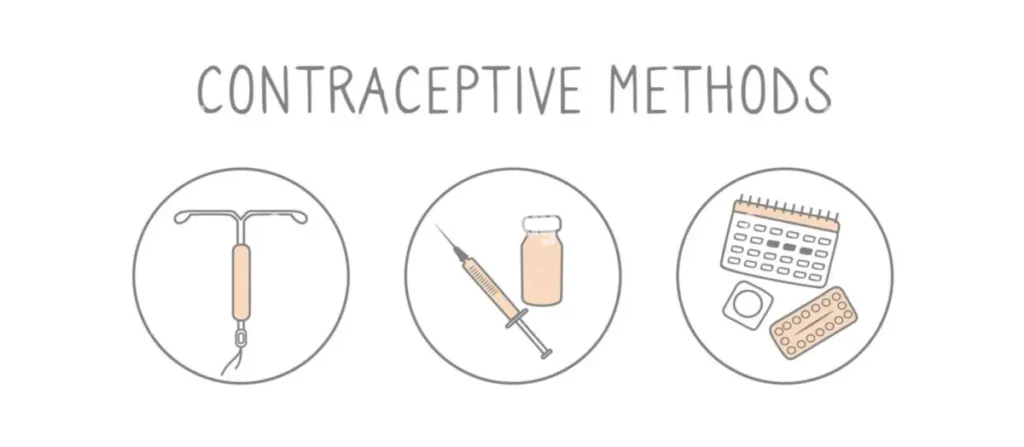
Nowadays, reproductive medicine provides an extensive range of options which can be generally divided into a few types of contraceptive methods:
- Short-Acting Hormonal Methods: You should use them regularly and correctly for better effectiveness. They comprise oral contraceptive pills (taken daily), prescription skin patches (replaced weekly), and flexible vaginal rings (changed monthly).
- Long-Acting Reversible Contraception (LARC): These are the best choice for anyone desiring to have maximum comfort with minimum effort on a daily basis. This group consists of intrauterine devices (IUDs) and little implants under the skin of the arm. They are very efficient, totally reversible, and can last for years without any daily or monthly maintenance.
- Barrier Methods: These stop sperm from coming into contact with an egg. Popular types include condoms (both male and female), diaphragms, and cervical caps. Additionally, condoms uniquely provide critical protection against sexually transmitted infections (STIs).
- Permanent Methods: For people or couples who are absolutely sure that they do not want children in the future, surgical methods are the options. This includes tubal ligation (commonly known as having your tubes tied) and vasectomy.
Family Planning Services in Silver Spring, Maryland
Finding a knowledgeable healthcare provider in your area will be very helpful if you are planning to talk about your reproductive health options, change your birth control method, or need a clinical procedure such as IUD insertion. This kind of care provider can do your physical health as well as help you to deal with complicated insurance requirements.
If you want to get the services of a doctor in your neighborhood who could offer you warm and friendly care along with a good knowledge of handling insurance, then you may visit Washington Medical Clinic for clinical guidance and insurance navigation in the Silver Spring area.
Besides just giving you medical assistance in family planning, a local and trusted clinic records your visits in such a manner that you receive the highest insurance coverage which ultimately results in your focusing on your health and future in a stress-free manner.
FAQs
The bottom line is mostly no. Evidence shows that the bulk of contraceptives hardly tick the scale up by any significant amount. However, those who are on the birth control shot (Depo-Provera) may be among the few who notice a minor increase in their weight.
If you forget to take a pill, take it as soon as you remember, a double dose is even allowed (two pills at once). Also, check with your pill pack legend to see if you need to use a condom for the next 7 days.
Impressively, contraceptives won’t impair your fertility for the rest of your life. In fact, your menstrual cycle and fertility will revert to their normal states shortly after you stop using contraceptives.
Contraception is the action or method of preventing pregnancy (the overall concept).
A contraceptive is the specific device, medication, or tool used to do it (like a condom, IUD, or pill).